Evergreen
Raising outdoor kids sounds like it should require a cabin, a boat, and a free calendar. It doesn't. It mostly requires being willing to go outside more often than is convenient, and being relaxed about how it goes once you're out there.
Childhood has moved indoors over the last few decades — more screens, more scheduling, less unsupervised roaming. The good news is that the fix isn't complicated. Kids are naturally drawn to dirt, water, sticks, and animals. The job isn't manufacturing interest. It's protecting time for it and getting out of the way.
Frequency Beats Intensity
One big annual trip is memorable. Twenty small outings build an identity. If the goal is a kid who chooses the outdoors on their own at seventeen, ordinary access matters more than epic experiences.
That means the creek behind the neighborhood counts. So does the county park, the retention pond with bluegill in it, the vacant lot with good bugs, and the backyard after dark. Kids don't compare their childhood to a magazine spread. They just know whether being outside is normal in their family or a special occasion.
Aim for short and repeatable. Thirty minutes after school, four days a week, will do more than a heroic Saturday once a month.
Getting Kids Outdoors When They'd Rather Not
Resistance is normal, especially past age eight, and especially when a screen was on beforehand. A few things reliably help.
Lower the Friction
- Keep boots, jackets, and a headlamp by the door so going out takes thirty seconds, not fifteen minutes
- Have a go-bag with water, snacks, bandages, and bug spray already packed
- Pick destinations under twenty minutes away for weekday trips
- Let them wear the clothes they want, and accept that everything will get filthy
Give Them a Mission, Not a Walk
"Let's go for a walk" is a hard sell. "Let's see if we can find where that owl is roosting" is a different proposition entirely. Kids outdoor activities work best with a concrete objective: catch something, find something, build something, climb something.
- Flip logs and rocks and identify what's underneath
- Follow a creek as far upstream as you can get
- Look for tracks after rain and figure out who made them
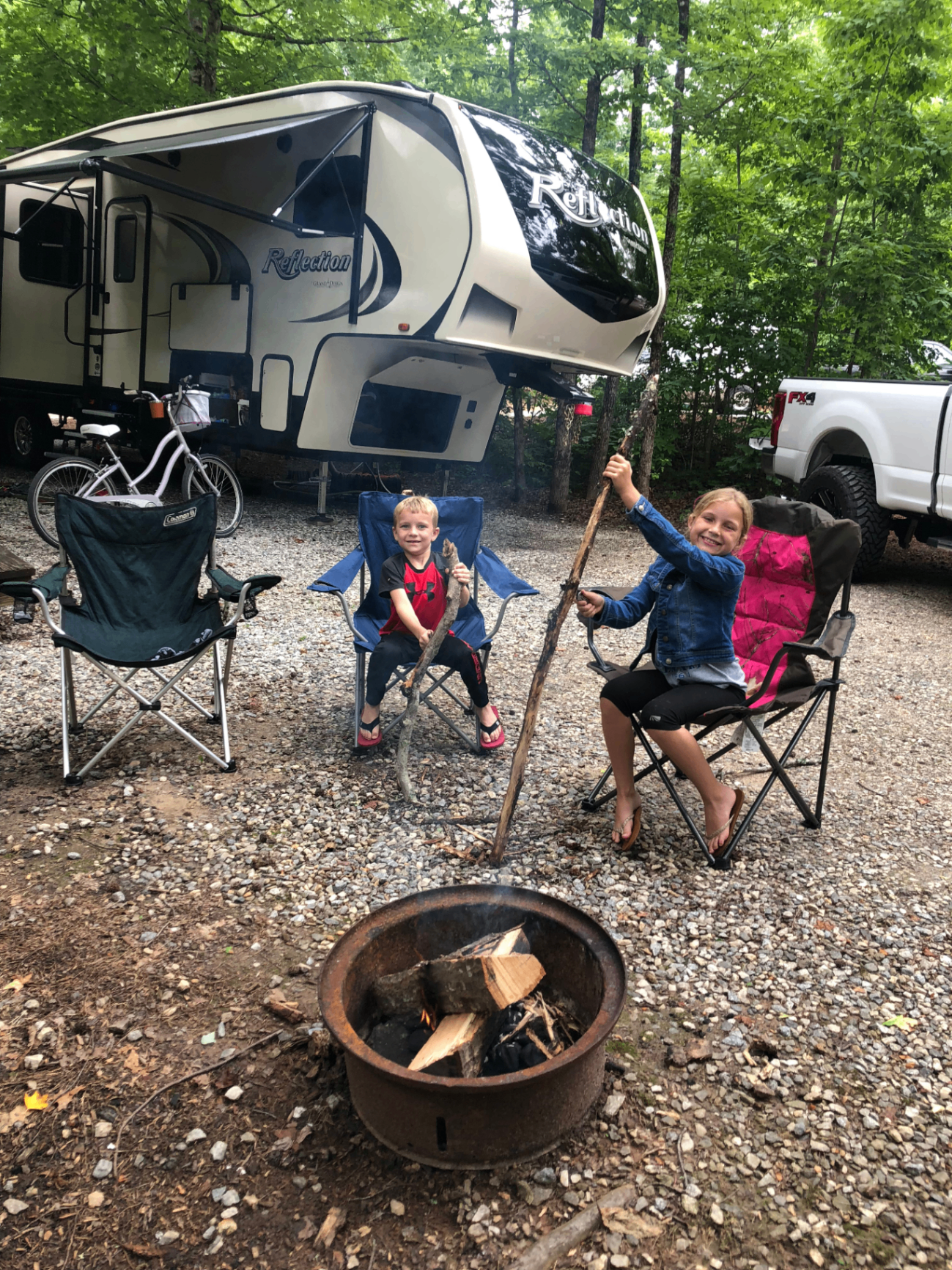
- Build a fire and cook one thing over it
- Fish for whatever bites most often, not whatever is most impressive
- Scout for shed antlers in late winter
Let Boredom Do Its Work
The best benefits of outdoor play show up in unstructured time — the stretch after a kid has run out of ideas and before they invent a new one. Damming a trickle of water, building a fort nobody asked for, spending forty minutes on a single log. It looks like nothing. It's actually where creativity, problem-solving, and independence get built.
Match the Activity to the Age
Toddlers and Preschoolers
Goals: sensory contact and comfort outdoors. Puddles, mud, sand, sticks, rocks, bugs. Distance covered is irrelevant — a fifty-yard walk that takes an hour is a successful walk. Skip anything requiring stillness or patience.
Ages 5 to 8
Goals: competence and confidence. Short hikes with a turnaround point, panfish on a simple rod, a first pocketknife with real supervision, helping start the fire, sleeping in a tent in the yard. This is the ideal window for hunting and fishing with kids in a low-pressure way — short sits, lots of action, food involved.
Ages 9 to 12
Goals: skill and responsibility. They can carry their own pack, navigate with a map, run a reel, clean a fish, handle hunter education, and take on genuine jobs on family trips. Give them ownership of something — the tackle box, the fire, the camp kitchen.
Teenagers
Goals: autonomy and invitation. Teens need to feel like partners, not passengers. Let them plan a trip, choose the water, bring a friend, or head out on their own within agreed limits. The best move here is usually to say yes to their idea instead of selling them on yours.
Outdoor Family Adventures on a Real Budget
Gear marketing suggests the outdoors is expensive. Water and public land are free, and most of what kids actually need is cheap or borrowed:
- A cheap spinning combo and a container of worms will outfish an expensive setup in the hands of a nine-year-old
- Rubber boots and a rain jacket unlock about eighty percent of bad weather
- Hand-me-down camo works fine and they'll outgrow it in a year anyway
- State parks, wildlife management areas, and national forests cost little to nothing
- Public libraries and state agencies often loan gear or run free clinics
Buy warmth and dry feet first. Everything else can wait.
What Kids Actually Take From It
Time outside gives kids things that are hard to deliver any other way: real physical competence, useful risk assessment, comfort with discomfort, and a working understanding that food, water, and weather aren't abstractions.
It also gives them patience, which is arguably the most transferable skill available to a young person. Sitting still, waiting for a bite, watching a field until something moves — that's training that pays off in classrooms and jobs and relationships. There's more on that in what the outdoors teaches us about patience.
And it gives them belonging. Kids who grow up hunting, fishing, and camping with their people inherit a place in something older than themselves — which is exactly what family hunting traditions are built to hand down.
Safety Rules That Buy Kids More Freedom
Kids get more independence outside when adults trust them, and trust is built on a short list of non-negotiables they can actually remember. Long lectures don't work. Three or four hard rules, repeated until they're automatic, do.
- Always tell an adult where you're going and when you'll be back
- Stay within sight or sound of an agreed boundary — a creek, a fence, a trailhead
- Water gets a life jacket, no negotiation, no exceptions on a boat
- Anything with a blade or a trigger stays pointed in a safe direction, every second
- If you get turned around, stop moving and stay put
Then let them use that freedom. A kid allowed to walk the treeline alone, build a fire under loose supervision, or paddle a hundred yards ahead learns judgment that no amount of instruction can install. Managed risk is the point, not a side effect.
Wonder Is Worth Protecting
Kids notice things adults have trained themselves to walk past — the shape of a track, the exact color of the sky twenty minutes after sunset, an insect nobody can identify. That instinct fades fast if nothing ever encourages it.
So take the questions seriously, even the ones you can't answer. Look things up together afterward. Keep a cheap field guide in the truck. For families where faith is central, the outdoors is one of the most natural places for kids to encounter the idea that creation points to a Creator — not because anyone lectured about it, but because standing under an open sky raises the question on its own.
Keep It Light and Keep Going
Some trips will be a bust. Someone will fall in. Someone will be cold and vocal about it. Nothing will bite. That's part of it, and kids take their cue from how the adults handle it — a bad day framed as a funny story stays a funny story.
Don't over-teach, either. Not every outing needs a lesson attached. Sometimes the most valuable thing you can do is walk beside them, answer questions when asked, and let the place do the work.
Kids who love the outdoors are mostly just kids who were taken outside a lot, without much fuss, by people who clearly enjoyed being there. Start where you are, this week, close to home.